Imagination and Its Place in Music
Although the main instrumental structures such as the sonata and symphony were already clearly comprehensible, the development of the string quartet was initially less clear. It emerged between 1750 and 1760 within various musical forms such as the Italian sinfonia and sonata as well as the German divertimento.
Joseph Haydn (1732–1809) accepted an invitation from Karl Joseph Weber von Fürnberg to Weinzierl Castle near Wieselburg in Lower Austria and wrote his ten early string quartets there, although these works had not yet been given a specific title. In a catalog of works he had compiled himself, he first titled his Opus 1 “Cassatio” — this was the original name given to divertimentos performed outdoors in the Viennese Classical period — and later changed the title to “Divertimento”. His stylistic starting point was the South German–Austrian divertimento tradition — music in the galant style, but also a little playful. In the Paris print edition of 1762, his string quartets were referred to as “Simphonies ou Quatuors dialogués”.
As was typical of Joseph Haydn's early quartets, Op. 1 No. 2 follows the five-movement form of his divertimenti. A slow serenade movement forms the heart of the quartet and is surrounded by two minuets. The two fast opening and closing movements form the framework around these three movements. His quartets were very popular and therefore were printed several times early on. He is generally regarded as the “master of the string quartet”, but his works were also frequently criticized — mostly because of their humorous tone. Some tempi and the abundance of notes in his works are unexpected, and bars are filled differently than expected from the average string quartet.
A rarity in Haydn's compositions is the use of brass instruments: only one trumpet concerto and a few horn concertos can be found among his works. But Joseph Haydn must also have known the trombone as a solo instrument, as his brother Michael Haydn and Johann Georg Albrechtsberger — whose brother Anton played in a quartet with Joseph Haydn, the castle administrator and the castle pastor in Weinzierl — each composed a concerto for alto trombone.
Only a few years after Joseph Haydn composed his Opus 1, the hymns on which John Cage based his Harmonies were written in North America. He transformed 44 Protestant hymns from the 18th century — congregational songs for church services — into fragments for his work “Apartment House 1776”. The absence of cadences creates spaces of openness in his works, and John Cage leaves it to our imagination what we (continue to) hear in the silence. For the composer, absolute silence did not exist; he came to this realization, among other things, after he himself spent some time in an anechoic chamber. Known as a fan of simple “sound”, he was careful not to interpret tones — and thus also silence — as anything other than what they are, as he made clear in a 1992 documentary: “I love sounds, just as they are. I don't want to see them psychological, I don't want to see a sound as a bucket, or as a president or in love with another sound — I just want it to be a sound!”
The balancing act between tradition and innovation is felt in hardly any other work as much as in these 44 Harmonies, about which he himself said: “The cadences and everything disappear, but the flavor remains. You can recognize it as 18th century music, but it's suddenly brilliant in a new way.”
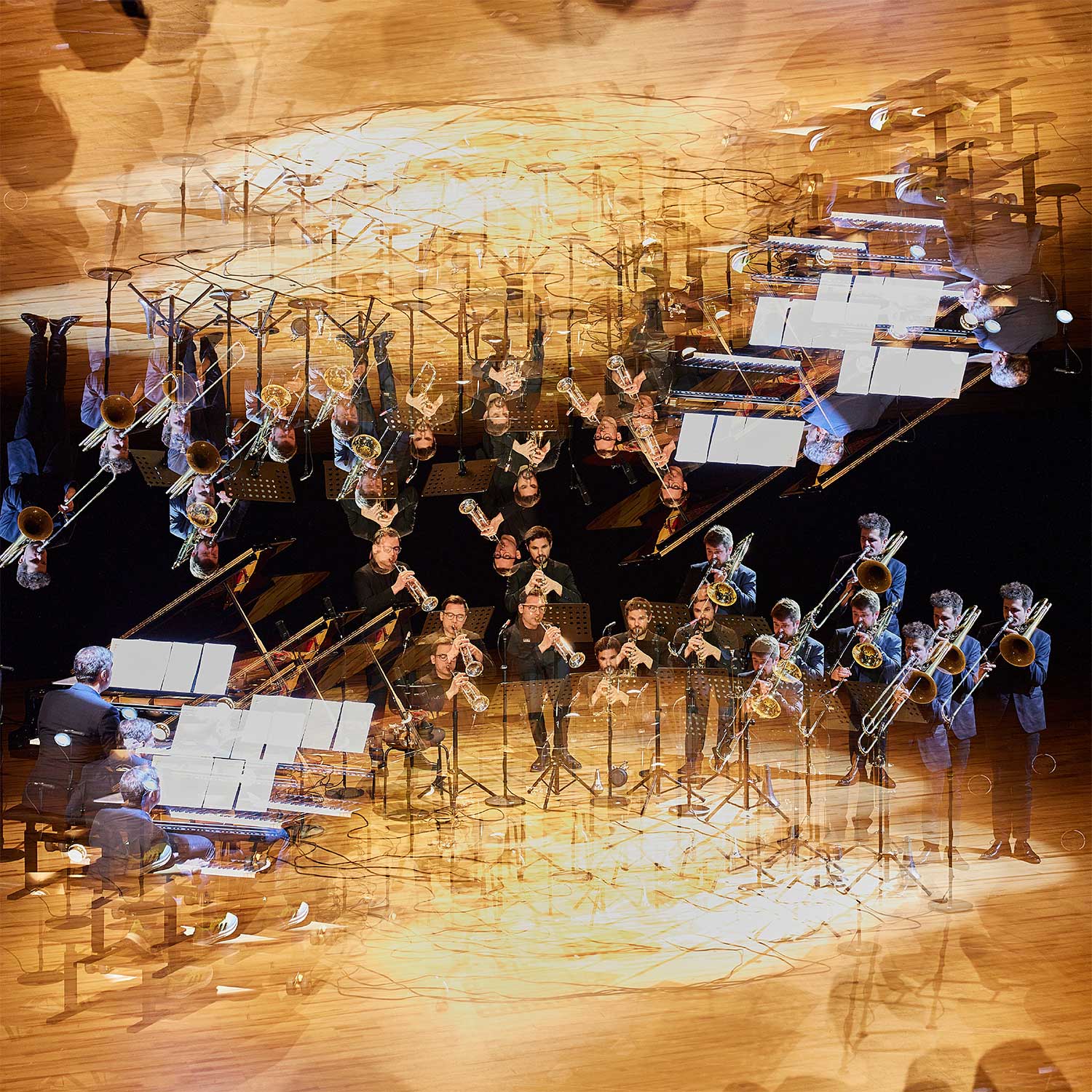
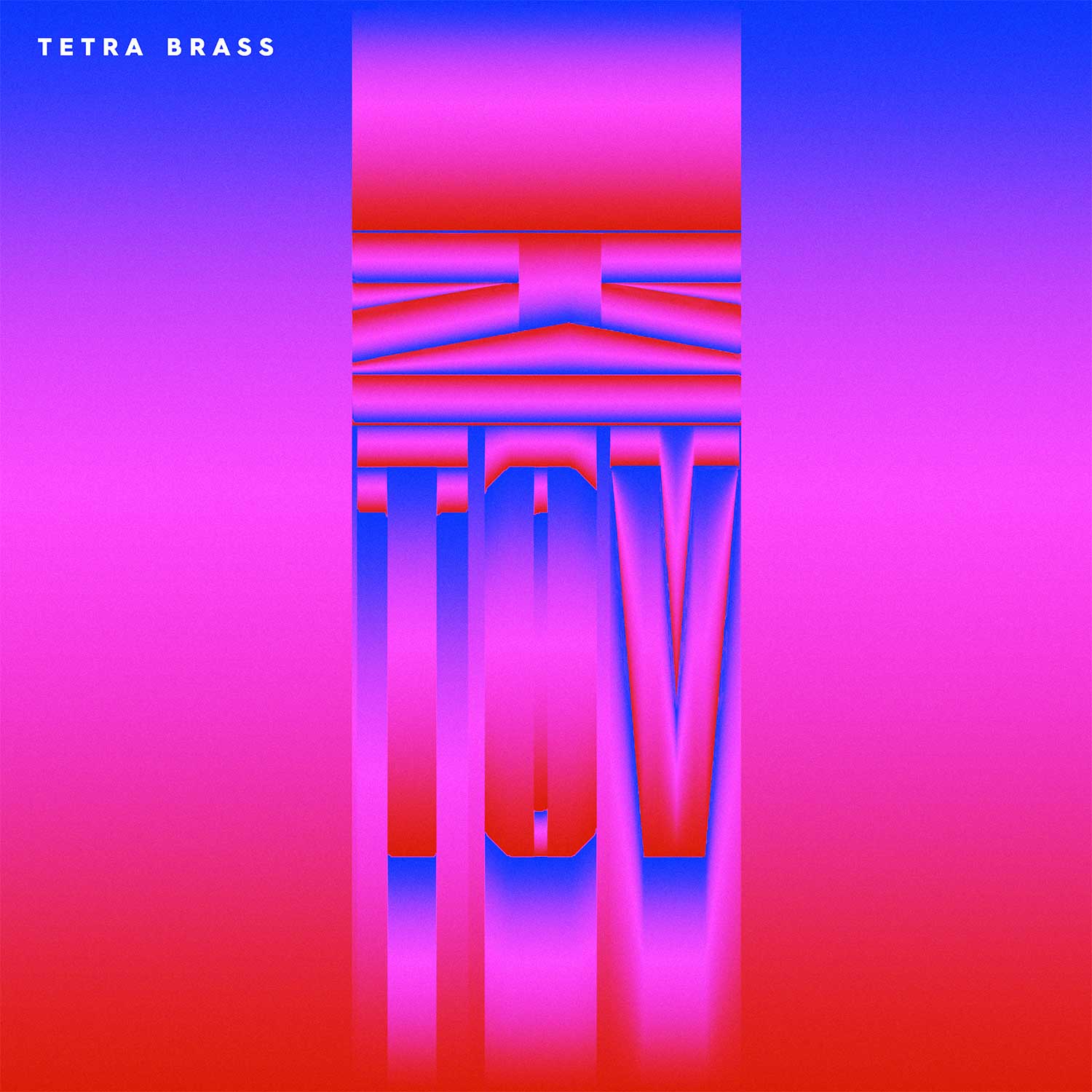
The musicians of Tetra Brass interpret the “Harmonies” in their own way, placing them in dialogue with Joseph Haydn's quartet. At times in unexpected ways, and so they may also open up a completely new way of understanding and experiencing the music.
“I have nothing to say and I am saying it and this is poetry as I need it. This space of time is organized. We need not fear the silences — we may love them.” — John Cage, Lecture on Nothing
“My arrangement of the Quartet in E-flat major, Hob. III:2 by Joseph Haydn asks the question ‘What if…?’ I carefully tried to transfer the core of the music to the homogeneous timbre of our brass quartet, always with an awareness of the use of the trumpet and trombone as solo instruments by Haydn himself and his contemporaries.” — Christian Traute